


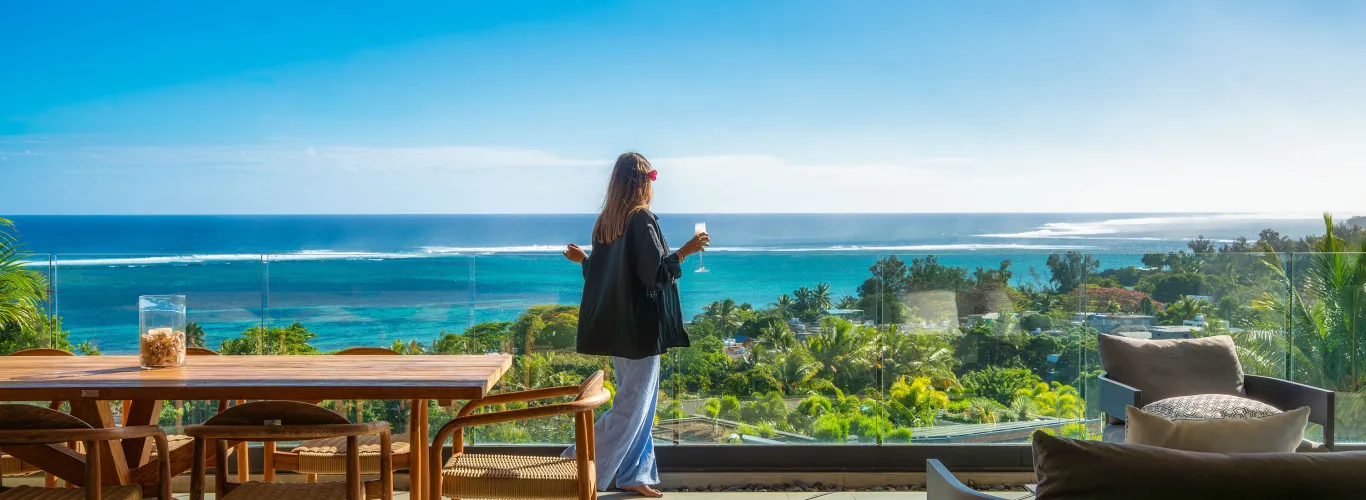
Coolcation: escaping the summer heat, why not Mauritius?
This summer once again, parts of Europe have experienced intense heat, with temperatures exceeding 40°C in several cities across the south of the continent. As these episodes become increasingly difficult to cope with, travellers are beginning to factor a new criterion into their holiday choices: the search for milder weather.
The phenomenon even has its own name: “coolcation”, a combination of “cool” and “vacation”. The idea? Travelling during the summer months not to seek out the heat, but rather to escape it.
The trend reflects a broader shift in travel habits.
According to Booking.com, 68% of travellers surveyed in 2026 say they take the risks associated with extreme weather conditions into account when choosing a destination, while 70% consider them when deciding when to travel. A further 22% say they prefer cooler destinations. But while the Nordic countries, Iceland and mountain regions naturally come to mind when it comes to escaping the heat, another possibility deserves a closer look: the southern hemisphere.
When Europe is enjoying its summer, Mauritius is experiencing its cool, dry season. It is a time when visitors can enjoy pleasant temperatures, drier air, sunshine and the lagoon, without giving up the beach experience that makes the island so appealing.
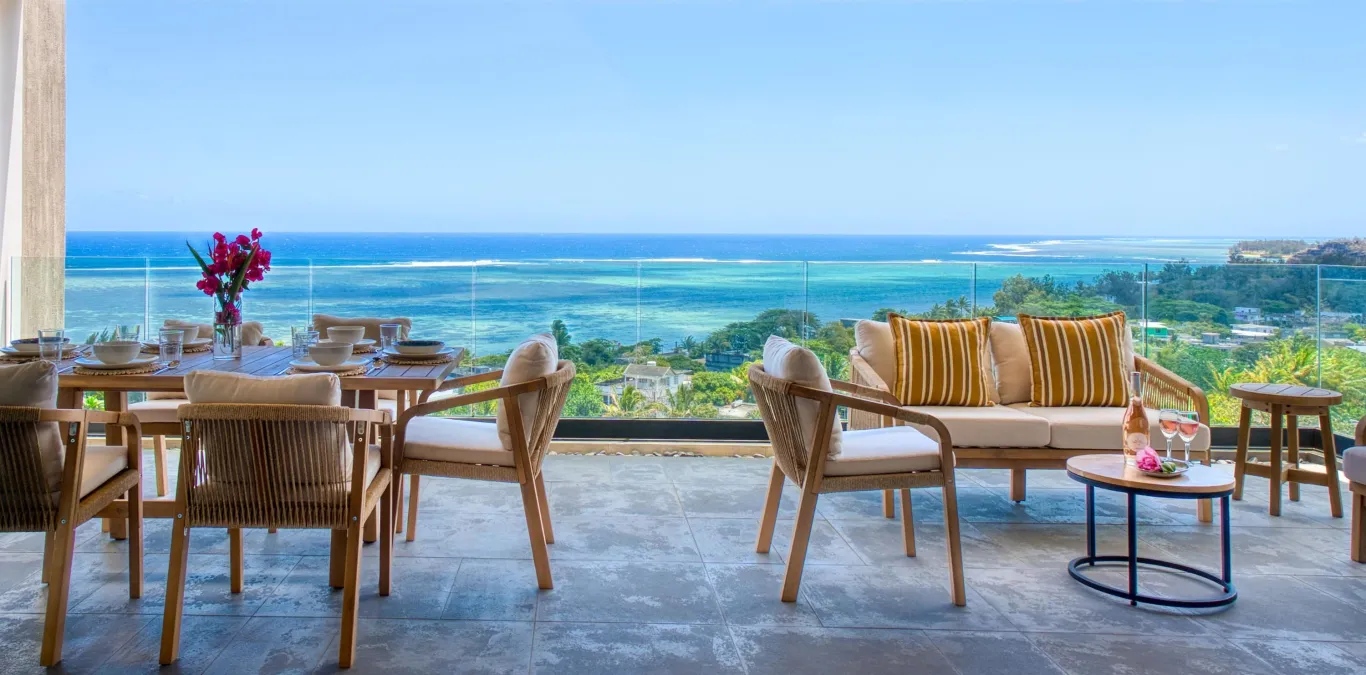
And what if, next summer, the best way to escape the heat was not to give up on traditional sunny destinations? Mauritius offers a different take on coolcation: a mild, sunny and distinctly beach-oriented southern hemisphere winter.
What exactly is a coolcation?
The principle is simple: rather than heading to traditional beach destinations in summer, more and more travellers are turning to regions with milder temperatures — Scandinavia, Iceland, the Alps or the northern European coast.
The aim is not to give up on holidays, but to enjoy them in more comfortable conditions: hiking, outdoor activities, exploring nature and cultural visits all become more enjoyable when temperatures make it possible to stay outside without having to contend with excessive heat.
It is an interesting shift in the way people choose a destination. Thermal comfort is gradually becoming a criterion in its own right, alongside price, distance and the activities on offer.
But the most obvious coolcation destinations sometimes involve a compromise: gaining cooler temperatures can also mean accepting more changeable weather, colder seas or giving up some of the pleasures traditionally associated with summer holidays.
And what if the real alternative was to look for that coolness… in the southern hemisphere?
What if the real coolcation was in the southern hemisphere?
While Europe experiences episodes of extreme heat between June and September, Mauritius is going through the coolest period of the year. The official winter season runs from June to September, with May and October as transition months. For travellers, the entire May-to-October period is therefore a particularly appealing window for enjoying a milder, drier climate.
Contrary to what the word “winter” might suggest, this is obviously not a cold winter. Along the coast, daytime temperatures generally range from 22 to 28°C, depending on the region and month. On the west coast, temperatures remain particularly pleasant, with average highs still above 26°C in the middle of winter. The trade winds also bring a regular breeze that makes the days feel more comfortable.
This is precisely what makes Mauritius an appealing coolcation destination: a climate that is cool enough to encourage outdoor activities, while retaining all the ingredients of a tropical holiday.
And the sea is very much part of the equation. In July and August, water temperatures generally remain around 24°C in several parts of the island, including around Le Morne. The lagoon therefore remains perfectly suited to swimming, boat trips, snorkelling and other water-based activities.
A particularly pleasant time for children
For families, this milder weather also changes the rhythm of the day. Younger children can enjoy more time outdoors without having to contend with the intense heat of the southern hemisphere summer: walks, swimming, exploring nature, water sports and hiking are all easier to incorporate into the holiday programme.
For toddlers in particular, avoiding very hot days can make travelling and taking part in activities more comfortable. And when a break is needed, the Mauritian way of life naturally lends itself to alternating time outdoors, swimming and periods of rest.
A coolcation in Mauritius is therefore not simply about seeking a few degrees less: it is also a way of making the most of the outdoors as a family, without the heat dictating the day's schedule.
A dry, sunny season made for outdoor activities
Mauritius's southern hemisphere winter is not only cooler; it is also generally drier, with significantly less rainfall than during the height of the southern hemisphere summer. The trade winds are more regular, making conditions particularly favourable for a wide range of outdoor activities.
For hiking enthusiasts, the more moderate temperatures make the island's landscapes much more enjoyable to explore. It is also an excellent time to discover the scenery of the south-west, from Black River Gorges National Park to Le Morne Brabant, without having to contend with the heat of the hottest months.
The season is also marked by the presence of humpback whales off the coast of Mauritius. According to official tourism sources, their winter migration can be observed from June to September, while the waters off the west coast are also frequented by sperm whales year-round.
For kitesurfing enthusiasts, the period is equally appealing. The trade winds, which are more regular from May to October, contribute to the conditions sought after around Le Morne, one of the island's iconic kitesurfing spots.
One final factor to consider when choosing when to travel: Mauritius has distinct microclimates from one region to another. The west coast, particularly around Baie du Cap, is generally more sheltered than the east coast, which is more exposed to the trade winds. For a winter stay seeking a balance between cooler temperatures, sunshine and a gentle beach lifestyle, the south-west is therefore a particularly appealing option.
The best combination: cool and sunny
This is precisely where the difference lies between a classic coolcation and a stay in Mauritius during the cool season.
Travelling to Scandinavia or Iceland to escape the heat means discovering exceptional landscapes and natural environments, but also accepting more changeable weather and sometimes cool temperatures, even during the day.
In Mauritius, the compromise is different. Temperatures become more comfortable without taking away the sunshine, lagoon or beach activities. For travellers who want to escape excessive heat without giving up the beach, the pool, the lagoon or the sunsets, the island offers a relatively rare combination.
It is therefore not a question of deciding which destination is best, but rather which type of coolcation matches your preferences: Nordic landscapes and cooler temperatures on the one hand, a milder tropical climate and a beach experience on the other.
Norway, Iceland, Mauritius: what should you choose?
A coolcation in Norway or Iceland will appeal to those who love wide open spaces, hiking, Nordic landscapes and distinctive northern lights. These destinations offer an experience that is radically different from that of a tropical island.
Mauritius is better suited to those who want to escape excessive heat without giving up the familiar pleasures of a summer holiday: swimming, relaxing on a terrace, enjoying water-based activities, walking in nature and spending time outdoors.
Two different travel philosophies, then, but the same starting point: no longer considering heat an essential part of a summer holiday.
Another advantage: the budget
The cool season can also be of interest to travellers looking to keep a closer eye on their budget. Tourist numbers vary depending on the time of year and school holidays, with demand generally higher towards the end of the year and around the festive season.
To make the most of the combination of pleasant weather and more moderate visitor numbers, May, June, September and October can be particularly interesting, especially for travellers who are able to avoid European school holidays.
It would nevertheless be excessive to describe these months as consistently the cheapest: flight and accommodation prices vary depending on dates, demand and events. The main advantage of this period is the opportunity to enjoy favourable weather while avoiding some of the busiest periods.
For flexible travellers, it is therefore a window worth considering: the climate is mild, there are plenty of activities to choose from, and beaches can be quieter than during the peak season.
What if coolcation became a seasonal way of life?
For many travellers, a coolcation remains a one- or two-week break. But the idea can go further.
Families, entrepreneurs and remote workers can also consider spending several weeks, or even several months, in Mauritius during the period when Europe experiences its hottest weather.
The island now has connectivity suited to a wide range of professional uses, while the time difference with Europe remains limited. For some people, this makes it possible to imagine a hybrid stay: working from Mauritius during part of the European summer, then returning to everyday life in Europe when temperatures become milder again.
Coolcation then stops being simply a new tourism trend. It becomes a different way of organising the year around the climate.
Architecture designed for this season: the example of Villas Nomadic
This drier, milder climate also highlights the value of bioclimatic architecture such as that of Villas Nomadic at Domaine d’Anbalaba in Baie du Cap.
The villas' large openings, designed to encourage natural ventilation and make the most of local climatic conditions, are particularly well suited to this period. The trade winds can circulate naturally through the living spaces, while the outdoor areas make it possible to fully enjoy the Mauritian climate.
In Baie du Cap, this relationship between architecture and the environment takes on a particular dimension. The village is located in the south-west of Mauritius, close to the lagoon and Le Morne Brabant, in a region where landscapes and outdoor activities naturally form part of everyday life.
From a terrace, Mauritius's cool season ultimately offers what coolcation enthusiasts are looking for: slowing down, breathing, spending more time outdoors and enjoying a comfortable climate — with the lagoon and the Mauritian way of life as an added bonus.
Frequently asked questions about coolcation in Mauritius
The coolest and driest period runs from May to October, with the official southern hemisphere winter lasting from June to September. Temperatures generally remain mild along the coast, while the trade winds bring an appreciable feeling of freshness.
Can you still swim in Mauritius during the southern hemisphere winter?
Yes. Water temperatures generally remain around 24°C during the coolest months, depending on the area and conditions. The lagoon therefore remains well suited to swimming and water-based activities.
Is Mauritius really cool in July and August?
It depends on what you mean by “cool”. This is not a cold climate: along the coast, maximum temperatures generally remain around 25 to 28°C, depending on the region. Evenings and mornings can, however, feel cooler.
What activities should you enjoy in Mauritius during the cool season?
Hiking, water-based activities, kitesurfing, boat trips and observing marine wildlife are particularly appealing during this period.
Why choose Mauritius rather than a Nordic destination for a coolcation?
The two experiences are different. Nordic destinations offer cooler temperatures, wide open spaces and high-latitude landscapes. Mauritius allows travellers to seek more comfortable temperatures while retaining access to the lagoon, beaches, swimming and water-based activities.
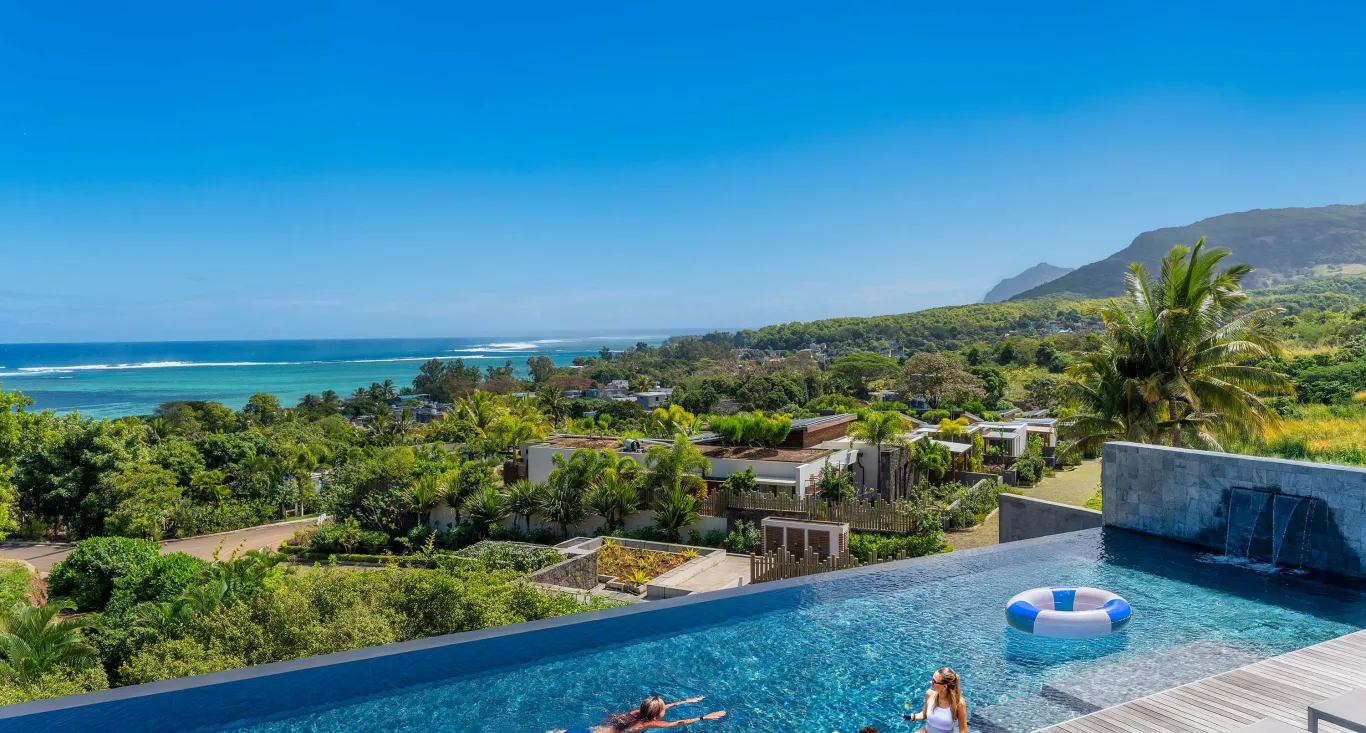
Want to escape the heat without giving up sunshine or the lagoon?
Domaine d’Anbalaba welcomes you to Baie du Cap, just 200 metres from the lagoon.
Stay in a villa or apartment with a pool and sea view, and enjoy hotel services for a successful coolcation.